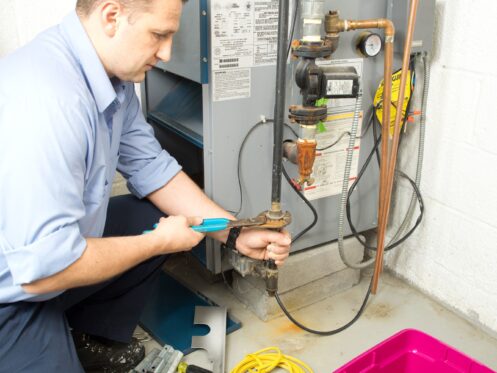
You head to the basement to change the furnace filter and find a puddle of water on the floor. Finding water pooling around your furnace is alarming, especially during a cold Central Massachusetts winter. You might fear a major, expensive failure, but that’s not always the case. A furnace leak doesn’t automatically mean you need a replacement.
Water around your furnace can come from several sources, some of which are part of your system’s normal operation. While high-efficiency furnaces are designed to produce condensation, that water should be contained and routed away safely. This guide covers the likely causes of a furnace leak, the safe first steps to take, and when to call for professional repair.
Why Some Furnaces Produce Water
A common question we hear from homeowners is whether a furnace can leak water. The answer depends on your furnace type. Modern high-efficiency gas furnaces, or condensing furnaces, extract more heat from the combustion process than older models. This process cools the exhaust gases enough for water vapor to condense into liquid.
This liquid, called condensate, is normal and is managed by a dedicated drainage system. The condensate is collected and travels through PVC pipes to a floor drain. In some homes, especially in basements in towns like West Boylston or Yarmouth where a gravity drain isn’t practical, a small condensate pump is used to actively pump the water away.
In contrast, conventional non-condensing furnaces do not produce water during the heating cycle. Their hotter exhaust gases exit the home before condensation can occur. While water inside a drainage system is expected for a high-efficiency unit, water pooling outside it is a clear sign of a problem.
Common Reasons a Furnace Leaks During Heating Season
If you have a high-efficiency furnace, the most common reason for a leak is a problem with the condensate drainage system. A simple blockage can cause water to back up and spill onto the floor. The source of the leak is not always obvious since water can travel along equipment before dripping.
- Blocked condensate drain or trap
- Cracked or disconnected drain tubing
- Failed condensate pump
- Leaking whole-home humidifier
- Failed internal components or seals
- Improperly installed venting or drainage
Even a small drainage problem can quickly lead to a noticeable puddle. It’s important to have a qualified technician address these issues to prevent further damage.
Could the Water Be Coming From Your Air Conditioner or Nearby Plumbing?
In many homes, the furnace and central air conditioner are part of a single integrated system. The indoor AC evaporator coil often sits inside or on top of the furnace cabinet. During the summer, this coil removes humidity from the air, which produces its own condensation. This water drains away through a separate but sometimes connected drain line.
If you notice water in the spring or fall when you might use both heating and cooling, the source could be the AC. A blocked AC drain line, a cracked drain pan, or a thawing frozen evaporator coil can all create a leak near the furnace. The key question is whether the water appears when the heat is running, when the AC is running, or when neither is operating?
It’s also important to look at the surrounding area. Many basements in Falmouth and other coastal towns house more than just the furnace. Nearby water heaters, plumbing lines, laundry equipment, or foundation seepage can be the true source of the water.
What to Do When You Find Water Around the Furnace
Discovering a leak can be stressful, but a few careful steps can ensure your safety and prevent further damage. Your priority should always be safety, especially when water and electricity are involved.
- Turn the system off at the thermostat
- Avoid wet electrical components
- Shut off power at the breaker if safe
- Clean up the water to prevent damage
- Photograph the leak and surrounding area
- Schedule a professional repair service
Under no circumstances should you open the furnace cabinet, tamper with internal components, or try to bypass any safety switches. Remember, turning off the thermostat stops the system from calling for heat, but it does not disconnect all electrical power. If you smell gas or a carbon monoxide alarm sounds, leave your home immediately and call for emergency help from a safe location.
What a Technician Checks During a Furnace Leak Repair
When a technician from DeWolfe Plumbing, Heating & Cooling arrives, they will perform a thorough diagnosis to find the water’s source. A puddle near the furnace doesn’t always mean the furnace is the cause. Our experienced team will systematically inspect the entire system to pinpoint the problem.
This process involves inspecting all condensate drains, traps, tubing, and collection pans. If a condensate pump is installed, we will check its operation, power supply, and discharge line. For homes with a whole-home humidifier, we evaluate its water connections and drainage. We will also look at the system’s venting and drainage configuration to ensure it was installed correctly.
Once the diagnosis is complete, we can recommend the appropriate heating repair. For a simple clog, clearing the blockage may resolve the leak. Other problems might require replacing a failed pump, cracked tubing, or a broken seal. The presence of water alone does not mean your furnace needs to be replaced.
How to Reduce the Risk of Future Leaks
While no system is completely immune to problems, preventative measures can significantly reduce the risk of unexpected leaks. The most effective step you can take is scheduling routine professional maintenance for your heating system.
During a heating maintenance visit, a technician will inspect, clean, and test the condensate drainage components as part of a comprehensive tune-up. This helps catch potential blockages or failing parts before they cause a leak. It’s also important to maintain any connected humidifiers and replace your furnace filter on schedule to support proper airflow.
Keeping the area around your furnace clean and accessible makes it easier to spot small drips or corrosion early. For added peace of mind, consider placing a water leak detector near your basement HVAC equipment, which can provide an early alert to any moisture.
Finding water around your furnace requires careful attention, but it’s often a fixable drainage problem. The most important first step is to identify the water’s source, whether it’s the furnace, AC, or another appliance. Addressing the issue promptly protects your equipment and your home from water damage and mold growth.
Since 1931, our family-owned business has been helping homeowners across Central Massachusetts and Cape Cod with all their heating needs. You can trust DeWolfe Plumbing, Heating & Cooling for honest diagnostics and reliable repairs.
For expert heating repair in Central Massachusetts and Cape Cod, contact the experienced team at DeWolfe Plumbing, Heating & Cooling today.