Allergy season can result in persistent coughing, sneezing, itchy eyes, and congestion. As pollen counts rise in West Boylston, MA during allergy season, homeowners head indoors to find relief. Your HVAC system becomes a key component in feeling your best. It’s important that you replace your HVAC air filter regularly. This can drastically reduce indoor allergen levels and protect your heating and cooling equipment’s interior components. Allow our team here at DeWolfe Plumbing, Heating & Cooling to help you achieve optimal indoor air quality this allergy season and beyond.
What Allergens Do Filters Trap?
In the spring and summer in West Boylston, it’s common to see high levels of grass, tree, and weed pollen outside. This pollen can make its way indoors on your clothing, shoes, skin, and hair. Also, there are indoor allergens to contend with. Your average home deals with dust, dust mites, pet dander, and mold spores on a regular basis. More than 24 million people living in the United States suffer from environmental allergies to some degree. Approximately 81 million Americans suffer from seasonal allergies. Managing your indoor air quality is essential.
HVAC Air Filter Basics
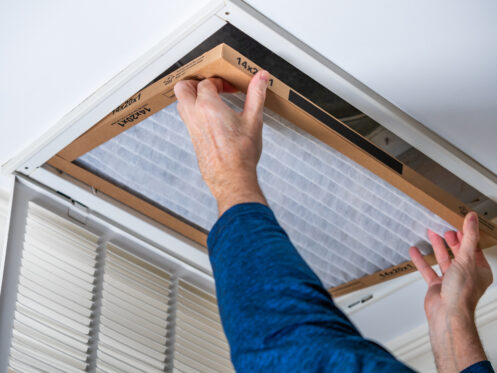
As your HVAC system runs, air will pass through its filter. This filter will stop particulate matter in its tracks before it can recirculate back into your home. This also protects interior components from becoming coated with debris, which could cause system issues.
Keep in mind, not all HVAC filters are made alike. Filters come rated with a minimum-efficiency reporting value, or MERV, rating. The higher the MERV rating, the more effective a filter is at removing particulate matter from the air. However, a filter that is too restrictive can be bad for your HVAC equipment. Try to stick with using a filter that is between 8 and 12 MERV to improve your allergy symptoms while protecting your HVAC system.
Basic fiberglass filters typically have MERV ratings between 1 and 4. They can catch large particulates, but they’re not as effective at stopping smaller pollutants like pollen, mold, dander, or dust. The tradeoff is that they tend to cost less up front compared to filters with higher MERV ratings.
Pleated filters can be made of fiberglass, paper, or other materials. They use the added surface area of the pleats to catch more contaminants. The MERV range for pleated filters is larger, with options as low as MERV 5 and as high as MERV 12. Filters rated MERV 5 through 8 do a great job at catching a large variety of particulates. Filters rated MERV 9 and higher catch even more and are usually denoted as being ideal for pet owners or people with allergies.
Filters that hit MERV 12 and higher may begin to restrict the airflow of residential HVAC systems. They work well for commercial applications with larger equipment. You may also see HEPA, or high-efficiency particulate air, filters. As the name implies, they’re highly efficient and can even help prevent the spread of illness. However, HEPA filters are not intended for use in home HVAC systems, as the restriction of airflow can cause damage to the system.
Commercial facilities like hospitals often have HVAC equipment that can handle HEPA filters. At home, you can use a standalone air purifier with a HEPA filter inside to augment your existing filter. Whole-home filtration systems place the filter media in a different area of the system to account for the airflow, which is another way of incorporating HEPA filtration into a home HVAC system.
HVAC Filter Replacement Schedule
Most HVAC filters require replacement every 30 to 90 days. If you or someone in your home suffers from allergies, you might find that you need more frequent replacements. However, refer to the instructions provided by the manufacturer of your filter. You can also refer to your HVAC system’s owner’s manual to see what is recommended. Our team can also help you come up with a schedule that will support your indoor air quality.
The frequency at which you change your filter can vary. For example, the number of people in your home and whether you have pets is an important consideration. More people and pets mean more dust, dander, and skin cells. The area where you live can determine how much pollen is in your indoor air. In spring and summer, you can expect pollen levels to be more prevalent. The more your system runs, the more frequently you will need to change your filter.
HVAC System Strain
A dirty filter won’t help support healthy indoor air quality. It can also cause strain on your HVAC equipment. Your system will work harder to function with a clogged filter. This can increase the amount of energy you’re using each month and increase your utility bills. Changing your filter routinely will protect your HVAC system so it can do its job of protecting your indoor air quality.
Indoor Humidity Levels
The relative humidity in your home should be between 30% and 50% to prevent the growth of mold. Make sure you’re using a filter that is restrictive enough that it can trap mold. If you’re dealing with high humidity, consider investing in a whole-home dehumidifier. Installed onto your HVAC system, a whole-home dehumidifier removes moisture when your heating or cooling equipment is on.
A UV-sanitizing light can be very helpful regarding the destruction of mold spores in your indoor air, which stems from high humidity. This device installs onto your HVAC system. By exposing bacteria, viruses, mold, and pathogens to UV-C light, their cellular structure becomes damaged. UV-C light installed near your evaporator coil will neutralize microbial contaminants that may be growing in your system.
You should also seal any cracks or gaps that are around windows, doors, and your foundation. These areas can allow allergens to come inside as well as moisture. Use products like weatherstripping and caulk to achieve a tight home envelope.
Professional Maintenance Support
In addition to replacing your HVAC filter on a regular basis, schedule professional maintenance. This appointment should occur at least once per year, ideally, prior to the start of spring if you suffer from allergies. Our team can inspect your HVAC system for any buildup of debris, as well as leaks and damage to coils, blower assemblies, and more.
We here at DeWolfe Plumbing, Heating & Cooling are ready to help you achieve optimal indoor air quality in your West Boylston home. Offering guidance for filter selection and replacement, we’re the team to call with your indoor air quality questions. We can also perform routine HVAC inspection and maintenance along with emergency repairs. Contact us at DeWolfe Plumbing, Heating & Cooling in West Boylston today for more information or to schedule an appointment. You can buy filters on our website here!