Holiday guests, extra laundry, and a marathon of dish cycles put your water heater under strain. If taps turn lukewarm or showers run cold, small issues are often to blame and not a full system failure. A few smart checks can help you sort out what is happening and what to do next. At DeWolfe Plumbing, Heating & Cooling, in West Boylston, MA, we help homeowners tune up water heaters, fix problems, and plan upgrades when needed.
Why Holiday Schedules Strain Your Hot Water
When friends and family arrive, hot water demands stack up in ways your heater doesn’t experience the rest of the year. Back-to-back showers, washing dishes, and laundry all pull from the same source. A tank-style heater has a fixed volume and a recovery rate. Once you use the stored hot water, the burner or elements need time to reheat a fresh batch. If the inlet water is colder in winter, recovery slows, and the wait between showers feels longer.
A tankless heater doesn’t store water, yet it still has a maximum it can heat at once. Two showers and a dishwasher may push it past that limit, which shows up as temperature swings or the unit cycling on and off. Knowing how your system makes hot water helps you plan, so space out hot water use.
Simple Checks You Can Do Safely
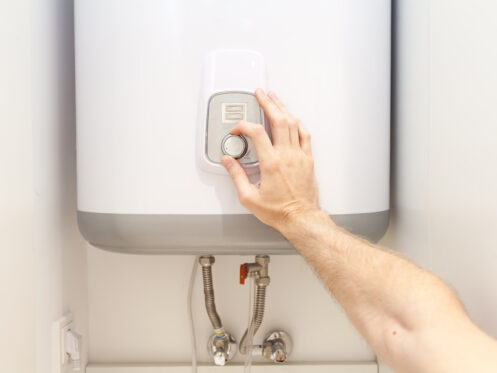
A few no-tools checks can save you time when hot water goes sideways. Look at the hot water heater’s dial, and confirm no one bumped it while moving boxes or cleaning. A safe target for most homes is near 120 degrees Fahrenheit. If someone turned the dial down for a vacation setting and forgot to reset it, that alone can explain lukewarm taps.
Listen near the tank while it heats. A burner sound or quiet element hum is normal. Loud popping or rumbling points to heavy sediment. That is a job for a licensed professional to flush and service. Stand near the heater base, and look for damp concrete, rust streaks, or a drip at the drain valve. Water around the tank calls for service right away. For tankless heaters, glance at the display for a code, and note it for the technician. Do not open covers or panels. If you smell gas, leave the area, and call your utility company from outside. If your electric heater’s breaker is tripping, do not keep resetting it; that is a signal to have the system checked.
What a Professional Does During Holiday Calls
When you schedule service, a trained technician brings test instruments and parts that make a real difference during the busy season. On tank models, we can flush sediment, check anode rod condition, test temperature controls, and verify that the burner or elements are delivering full output. If you have a gas unit, we’ll check the draft, combustion, and venting.
Electric units get a resistance test for heating elements, a check of wire connections, and verification of thermostat setpoints on both upper and lower stages. For tankless systems, a descaling service restores heat transfer, and we clean filters and check sensors for accurate readings. If your home uses a recirculation pump, our technician confirms timer settings, flow, and check valves so distant faucets get hot water without long waits.
When You Need Same-Day Help
Some symptoms call for immediate attention. Water around the base of the tank or dripping down the side can indicate a failing tank, a leaking relief valve, or a loose connection that won’t improve without service. Water that shifts from cool to scalding within seconds suggests a valve problem that needs a trained professional, especially with young kids or older adults in the home.
A gas smell near the heater, sooty marks, or a carbon monoxide alarm are safety alerts. Turn off nearby flames, step outside, and call for help. For electric systems, a breaker that trips again after one reset indicates an internal fault needs diagnosis. On tankless units, repeated shutdowns with a code or the unit refusing to fire when only one tap is open, are a sign to schedule service. During heavy guest use, don’t try to nurse a failing system along. The risk of bigger damage or no hot water for everyone is not worth it.
Gas, Electric, and Tankless: How Troubleshooting Differs
Gas tank heaters rely on combustion and venting. If you don’t have any hot water, a failed igniter, a gas valve, or a draft issue could be the issue. Lukewarm water that runs out quickly can be because of sediment or a weak burner that doesn’t light fully. Electric tank heaters have two heating elements and two thermostats.
A single failed element can make water feel warm but not hot or force very long recovery times after a shower. If both elements stop heating, you will have only cold water. Tankless heaters are sensitive to the flow rate and inlet temperature. If you open several fixtures at once, the unit may throttle to protect itself, which you feel as a temperature drop or cycling. In winter, colder inlet water reduces the flow that the heater can raise to your setpoint. If a tankless unit is shutting down, notice the code and the exact fixtures that were running so a technician can match the behavior to a cause quickly.
Temperature, Mixing, and Scald Awareness
Comfort and safety both depend on where hot and cold water mix. Shower valves, older sink mixers, and anti-scald devices drift as parts age. If the water swings from chilly to too hot with a tiny handle move, a valve may stick or be out of calibration. A tank set too high can also create scald risk at fixtures that don’t have modern mixing protection.
For most households, a tank set near 120 degrees Fahrenheit balances comfort with safety and helps limit mineral buildup. If you have a new baby in the family or older guests visiting, mention that to your technician. They can test outlet temperature, review anti-scald settings, and suggest safe changes to protect skin.
Upgrades That Solve Recurring Holiday Problems
If the same hot water pinch shows up every December, it may be time to plan changes that match how your home runs. A larger tank with a higher first-hour rating can handle stacked showers and dish cycles. A high recovery gas model reheats faster between uses. A properly sized tankless system with a recirculation loop can deliver steady hot water to distant bathrooms and handle multiple fixtures if you match the capacity and gas supply to the home.
Mixing valves at the tank can let a safe setpoint feed more usable gallons by tempering at the source. None of these choices is one size fits all. A professional can measure your fixtures, check pipe runs, review venting and gas supply, and recommend a setup that fits. Planning in a calm moment can help prevent scrambling during a holiday weekend.
Get Reliable Hot Water at Home
You need a steady supply of hot water during the holidays and throughout the year. If you are dealing with slow recovery, fluctuating temperatures, or leaks near the tank, a licensed technician can handle deeper diagnostics, safe repairs, and performance checks. We provide service for traditional and tankless water heaters, handle flushes, complete anode rod replacements, and install recirculation solutions that cut long waits at far fixtures. For fast help and clear recommendations, schedule your water heater service with DeWolfe Plumbing, Heating & Cooling today.